| Brand Name: | HUAKE |
| Model Number: | Y81-315 |
| MOQ: | 1 SET |
| Price: | 20000-50000 USD |
| Delivery Time: | 35-40 DAYS |
| Payment Terms: | L/C, T/T |
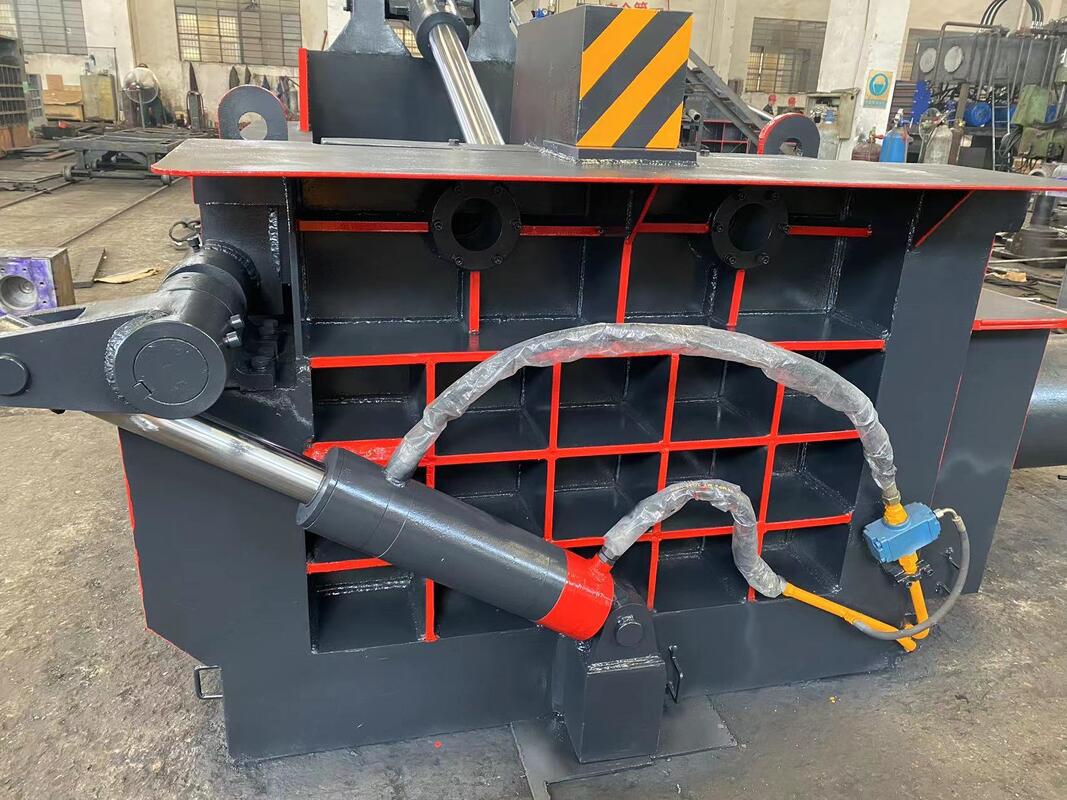
The Y81F-315B scrap metal baler is designed for compressing loose scrap metal into dense and regular bales that are easier to handle, stack, and move within recycling and processing operations. For this page angle, the most relevant data is not the shipment layout, but the machine’s compression structure: a 3150 kN main compression force, a defined 2000 × 1750 × 1200 mm material box, and a bale section of 600 × 600 mm. Together, these parameters provide a clearer basis for discussing bale compactness and output consistency.
The machine also uses two 45 kW motors, two hydraulic pumps rated at 31.5 MPa, and a water-cooling system, which supports a more engineering-based description of how dense bale formation is achieved.
This version is more suitable for scrap yards, recycling plants, and metal processing operations that care about how tightly loose scrap can be compressed into a more manageable form. In many projects, bale compactness matters because it affects storage organization, internal yard handling, and downstream loading efficiency.
The PDF images showing the machine during pressing and bale turn-out also support this angle, because they visually connect the machine structure with the formed bale output.
The main cylinder is rated at 3150 kN, which is the strongest single number supporting the machine’s compression capability. For pages focused on bale compactness, this is the first parameter that should be highlighted.
The bale size is listed as 600 × 600 mm, which gives the page a clear output reference. This is important because compactness is more persuasive when it is tied to a defined bale format rather than described in abstract terms.
The machine uses a 2000 × 1750 × 1200 mm material box. A defined chamber size helps explain how loose scrap is contained and compressed into a more regular bale section.
The hydraulic system uses two pumps rated at 31.5 MPa with 250 ml/r displacement, while the drive system uses two 45 kW motors. These figures help support the compactness-focused narrative with actual hydraulic and power-system data.
Loose scrap is loaded into the 2000 × 1750 × 1200 mm material box, where the hydraulic cylinder system compresses the material into a denser form. The main cylinder provides the primary compression force, while the supporting cylinders contribute to the chamber action and bale-forming sequence. The final output is a bale section of 600 × 600 mm.
This means the machine should be described not only as a 315-ton baler, but as a system that combines force, chamber size, and bale format to produce a tighter and more regular compressed result. The pressing and bale turn-out images in the PDF help reinforce this process visually.
Choose this model when your priority is not just compression force on paper, but the ability to form a more regular and denser bale section from loose scrap. The most relevant parameters to compare are the 3150 kN main force, the material box size, the 600 × 600 mm bale section, and the hydraulic configuration behind the compression process.
This content angle is especially useful when your buyer is concerned with how the machine turns irregular scrap into a tighter output format rather than asking first about transport or shipment details.
Loose scrap metal often creates a handling problem before it creates a transport problem. It takes up space, is difficult to organize, and does not move through the yard efficiently when it remains uncompressed or loosely packed. This machine addresses that issue by using a 3150 kN compression system and a defined chamber-and-bale layout to form a more compact 600 × 600 mm bale section.
It also helps buyers evaluate compactness more realistically, because the product page can tie compression quality to measurable data such as main force, chamber size, hydraulic pressure, and bale section instead of relying on unsupported wording like “super dense” or “perfectly compact.”
The main cylinder nominal thrust is 3150 kN.
The listed bale size is 600 × 600 mm.
The material box dimension is 2000 × 1750 × 1200 mm.
The machine uses two hydraulic pumps rated at 31.5 MPa with 250 ml/r displacement.
The PDF states 5–8 tons per hour
| Model | Main Cyl.Force (ton) |
Press Box Size (mm) |
Bale Size (mm) |
Bale Weight (kg) |
Motor (kW) |
| Y8FT-315A | 315 | 2000x1750x1000 | 500x600 | 300-500 | 2x45 |
| Y81F-315B | 315 | 2500x2000x1200 | 600x600 | 400-700 | 2x45 |
| Y81F-315E | 315 | 2500x2000x1200 | 600x600 | 400-700 | 2x45 |