logo
Good price online

products details

Created with Pixso. Home Created with Pixso. Products Created with Pixso.
Scrap Metal Cutting Machine
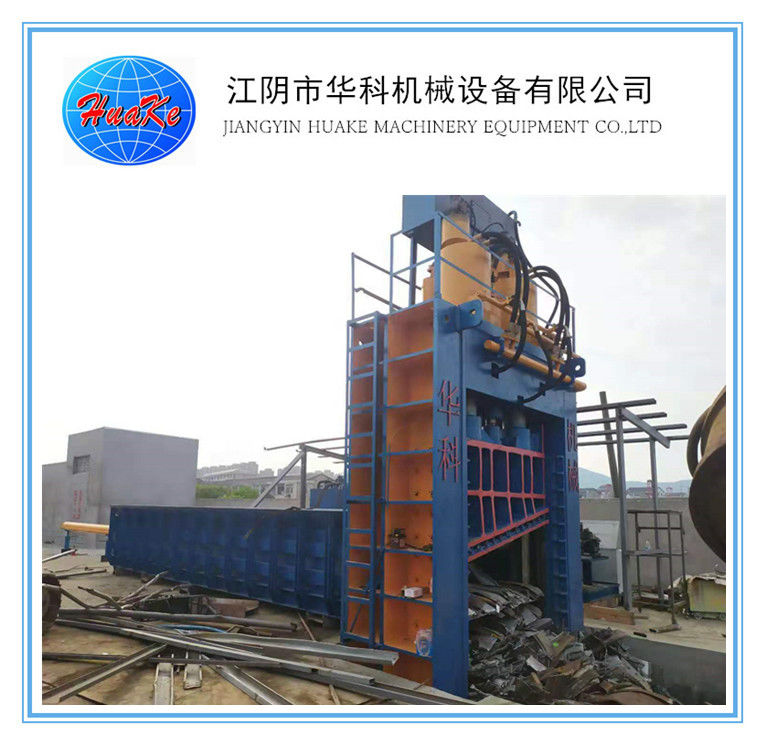
Created with Pixso. Q91Y-630W Heavy-Duty Hydraulic Scrap Metal Shear for 9–11 TPH Steel Scrap Processing

Q91Y-630W Heavy-Duty Hydraulic Scrap Metal Shear for 9–11 TPH Steel Scrap Processing

Brand Name: HUAKE
Model Number: q91y-630w
MOQ: 1 SET
Price: BY NEGOTIATION
Delivery Time: 60-70 DAYS
Detail Information
Place of Origin:
CHINA
Certification:
CE
The Internal Feed Box Measures:
7000 × 1600 × 900 Mm
Cutting Blade:
1600MM
PRODUCTION RATE:
9-11 T0NS PER HOUR
CUTTING LENGTH:
CAN BE SET ON TOUCH SCREEN BY YOUR SELF
SHEARING FORCE:
655TONS POWER
Minimum Shear Opening Height:
550MM
Total Installed Power:
137.2 KW
Control System:
PLC Control And Remote Operation
Empty-load Shearing Frequency:
3–4 Times/minute
Packaging Details:
EXPORT WORTHY PACKAGE
Supply Ability:
200 SETS PER YEAR
Highlight:

heavy-duty hydraulic scrap metal shear

,

9–11 TPH steel scrap shear

,

hydraulic scrap cutting machine

Product Description

A Wide-Blade Scrap Shear for Heavy Ferrous Materials

The Q91Y-630W hydraulic scrap metal shearing machine is designed for customers whose main challenge is not simply processing a large volume of scrap, but cutting heavy steel materials with different shapes and cross-sections.

Its key cutting configuration includes:

  • 655 tons of documented combined cylinder force
  • 1600mm cutting blade length
  • 1600mm effective shearing width
  • 550mm minimum shear opening height
  • 10.5-degree shearing angle
  • Two hydraulic material-holding cylinders
  • Rear hydraulic material feeding

This configuration makes the machine relevant to recycling yards and steel-processing facilities handling thick plate remnants, solid round steel, square sections, long structural scrap, and mixed heavy ferrous materials.

The machine is a hydraulic scrap shear rather than a baler or shredder. Its purpose is to shorten steel scrap through controlled blade movement instead of compressing it into blocks or breaking it into small fragments.


Why a 1600mm Cutting Blade Is Important

The blade length and shearing width are both specified as 1600mm.

A wider cutting area provides more space for positioning:

  • Wide steel plate offcuts
  • Multiple smaller steel sections
  • Irregularly shaped ferrous scrap
  • Long structural steel pieces
  • Bundled or stacked production remnants
  • Scrap with inconsistent external dimensions

For recycling operations, blade width is an important machine-selection parameter because scrap materials are rarely uniform.

A narrow shear opening may require operators to reposition, separate, or pre-cut large materials before loading. A 1600mm cutting width gives the operator more flexibility when arranging mixed steel scrap inside the cutting area.

However, the 1600mm figure describes the available shearing width. It does not mean that any solid steel piece with a width of 1600mm can be cut regardless of thickness or material grade. Actual capacity must also consider tensile strength, section size, blade position, and the number of pieces loaded under the blade.


Understanding the 655-Ton Shearing Configuration

The documented 655-ton figure comes from a multi-cylinder hydraulic arrangement.

Main shearing cylinders

The machine is equipped with two main shearing cylinders:

Parameter Specification
Cylinder model YG360/220-920
Quantity 2
Stroke 920mm
Maximum thrust per cylinder 2600kN
Approximate force per cylinder 260 tons
Combined main-cylinder force 520 tons

Fast shearing cylinder

A separate fast shearing cylinder is also installed:

Parameter Specification
Cylinder model YG260/160-920
Quantity 1
Stroke 920mm
Maximum thrust 1350kN
Approximate force 135 tons

The supplied specification calculates the total as:

520 tons + 135 tons = 655 tons

This should be described as combined shearing-cylinder force rather than the force of one single cylinder.


Reference Cutting Capacity by Material Shape

Steel scrap cannot be evaluated only by weight. Material shape and cross-section have a direct influence on cutting resistance.

The technical document provides reference cutting sizes for steel with tensile strength not exceeding:

Δb ≤ 450MPa

Material shape Reference cutting size
Solid round steel Ø130mm
Solid square steel 120 × 120mm
Steel plate 60 × 600mm

The document indicates that these reference values apply at the middle position of the blade.

These capacities are useful when evaluating whether the machine matches a customer’s actual scrap.

For example, a customer processing solid round bars should provide the maximum diameter. A customer processing plate offcuts should provide both thickness and width. For structural steel, the profile type and wall thickness should also be supplied.


Round Steel Cutting

The documented reference capacity for round steel is:

Ø130mm

This makes the machine relevant for facilities processing heavy round-bar remnants, rejected steel bars, machining stock ends, and similar solid ferrous materials.

The diameter alone is not enough to confirm capacity. The customer should also provide:

  • Steel grade
  • Tensile strength
  • Whether the material is solid or hollow
  • Number of bars cut at one time
  • Position of the material under the blade

A hollow steel pipe with a 130mm outside diameter does not create the same cutting load as a solid round bar of the same diameter.


Square Steel Cutting

The reference cutting size for square steel is:

120 × 120mm

Square sections create a different cutting-resistance pattern from round bars or flat plates. Their solid cross-section and corner geometry must be considered when positioning the material.

For customers processing square billets, square bars, or heavy solid production offcuts, the main information required is:

  • Width and height
  • Steel grade
  • Solid or hollow construction
  • Maximum number of pieces per cut
  • Required output length

The specified 120 × 120mm value should not automatically be applied to bundled square materials without a separate calculation.


Thick Steel Plate Cutting

For steel plate, the documented reference size is:

60 × 600mm

This parameter is particularly relevant to:

  • Steel plate cutting plants
  • Heavy fabrication workshops
  • Shipbuilding-related scrap processors
  • Structural steel manufacturers
  • Industrial plate offcut recycling
  • Steel service centers

When evaluating plate scrap, thickness normally has a greater effect on cutting resistance than width alone.

A wide but thin plate may be easier to shear than a narrow plate with significantly greater thickness. The customer should therefore provide both dimensions rather than only describing the material as “large steel plate.”


Material Strength Must Be Confirmed

The reference cutting capacities are based on steel with tensile strength of:

Δb ≤ 450MPa

This material-strength condition should always remain visible in the technical description.

Two pieces of steel with the same dimensions may require different cutting force when their steel grades or heat-treatment conditions are different.

Before issuing a final recommendation, the supplier should confirm:

  • Material grade
  • Tensile strength
  • Hardness, when relevant
  • Cross-sectional dimensions
  • Solid or hollow construction
  • Cutting position
  • Number of pieces loaded together

The machine should not be promoted as capable of cutting all steel grades solely based on the listed dimensions.


Hydraulic Holding Stabilizes Irregular Scrap

Heavy scrap often moves, tilts, or separates when it is placed inside the cutting chamber.

The Q91Y-630W is equipped with two hydraulic material-holding cylinders.

Holding-system parameter Specification
Cylinder model YG200/140-950
Quantity 2
Maximum thrust per cylinder 800kN
Approximate force per cylinder 80 tons
Combined holding force Approximately 160 tons
Cylinder travel 900mm

The holding cylinders press the material before the cutting stroke.

This is particularly useful when processing:

  • Irregular plate remnants
  • Stacked steel sections
  • Loose structural scrap
  • Curved or twisted steel pieces
  • Materials that do not lie flat
  • Multiple sections placed inside the chamber

The holding force does not replace correct loading. Operators must still position the material within the machine’s approved cutting area.


How the Shearing Angle Supports the Cutting Action

The specified shearing angle is 10.5 degrees.

An angled blade does not contact the full material width at exactly the same moment. Instead, the blade progressively enters the material across the cutting line.

For customers, the practical point is that cutting performance should be evaluated using the complete blade configuration, not only the nominal hydraulic force.

The relevant cutting parameters include:

  • 655-ton combined cylinder force
  • 1600mm blade length
  • 1600mm cutting width
  • 10.5-degree shearing angle
  • 550mm minimum shear opening height
  • Material-holding configuration

These parameters work together as one cutting system.


A 7-Meter Feed Box Complements the Wide Blade

The internal material box measures:

7000 × 1600 × 900mm

The 7000mm box length allows long steel scrap to be loaded and gradually advanced toward the 1600mm cutting area.

This combination is especially suitable when the customer handles long materials that cannot be placed directly into a small cutting chamber.

Typical examples include:

  • Long plate edges
  • Structural steel remnants
  • Steel production rejects
  • Long round or square bars
  • Demolition steel sections
  • Fabrication workshop offcuts

The feed-box dimensions should be checked against the customer’s maximum incoming material length, width, and loading method.


Rear Hydraulic Pushing for Controlled Material Positioning

The material is advanced by a rear-mounted hydraulic cylinder.

Pushing-system parameter Specification
Cylinder model YG220/160-7000
Cylinder stroke 7000mm
Maximum thrust 1350kN
Approximate pushing force 135 tons
Pushing speed 300mm/s
Pushing direction Rear-cylinder push
Length control Included

The rear pusher moves the loaded scrap toward the blade according to the selected feeding distance.

This system is particularly useful when long materials must be cut repeatedly into shorter sections. The feeding distance can be adjusted according to the customer’s preferred output length.

The specification includes a length-control system, although the final cut-length accuracy will also depend on material shape, loading stability, and operator settings.


Suitable Scrap Profiles

This machine is most relevant when the customer processes heavy ferrous scrap such as:

Solid steel sections

  • Round bars
  • Square bars
  • Heavy steel production ends
  • Solid industrial offcuts

Plate materials

  • Thick steel plate remnants
  • Wide plate strips
  • Heavy fabrication offcuts
  • Steel service-center waste

Structural scrap

  • Steel frames
  • Demolition steel
  • Long structural sections
  • Fabrication and construction remnants

Mixed heavy scrap

  • Scrap with different widths and lengths
  • Irregularly shaped steel pieces
  • Long scrap requiring repeated cuts
  • Materials too large for small alligator shears

Final suitability must be confirmed using material photos and dimensional information.


When a 1600mm Hydraulic Scrap Shear Is a Better Choice

The Q91Y-630W may be suitable when:

  • The incoming scrap is too large for a small alligator shear
  • The customer regularly processes thick plate remnants
  • Long scrap must be cut several times
  • Material widths vary significantly
  • Solid round or square sections are included
  • The customer needs hydraulic holding before cutting
  • Scrap must be shortened before transportation or furnace charging
  • Manual flame cutting is currently used for suitable steel materials

The machine may not be the correct choice when the customer primarily needs:

  • Compressed rectangular bales
  • Metal briquettes
  • Shredded fragments
  • Precision sheet-metal parts
  • A mobile or trailer-mounted shear
  • Processing of materials outside the confirmed strength range

Focused Cutting-System Specifications

Parameter Specification
Model Q91Y-630W
Machine category Hydraulic scrap metal shearing machine
Combined cylinder force 655 tons
Main shearing cylinders 2 × 260 tons
Fast shearing cylinder 1 × 135 tons
Blade length 1600mm
Shearing width 1600mm
Minimum shear opening height 550mm
Shearing angle 10.5°
Main cylinder stroke 920mm
Fast cylinder stroke 920mm
Material-holding force Approximately 160 tons
Holding cylinder quantity 2
Feed box size 7000 × 1600 × 900mm
Rear pushing force Approximately 135 tons
Pusher stroke 7000mm
Pushing speed 300mm/s
Reference round steel Ø130mm
Reference square steel 120 × 120mm
Reference steel plate 60 × 600mm
Reference material strength Δb ≤ 450MPa

How to Check Cutting Capacity Before Ordering

A machine recommendation should not be based only on the total daily scrap volume.

For cutting-capacity evaluation, provide the following information.

For round steel

  • Maximum diameter
  • Solid or hollow
  • Steel grade
  • Number of bars per cut

For square steel

  • Maximum width and height
  • Solid or hollow
  • Steel grade
  • Bundle arrangement

For steel plate

  • Maximum thickness
  • Maximum width
  • Plate grade
  • Number of layers

For structural steel

  • Profile type
  • Overall dimensions
  • Wall thickness
  • Material grade
  • Material photos

For mixed scrap

  • Photos of representative materials
  • Approximate percentage of each material type
  • Maximum individual piece size
  • Required final cut length

This information allows the manufacturer to compare the customer’s material against the documented reference capacities.


Common Selection Mistakes

Looking only at tonnage

Daily scrap tonnage does not show whether the machine can cut the largest individual material.

A recycling yard may process a moderate daily volume but still require a heavy machine because some pieces have a large solid cross-section.

Ignoring steel grade

A listed cutting size cannot be applied to every steel grade. The PDF reference values are based on tensile strength not exceeding 450MPa.

Treating blade width as maximum plate capacity

The 1600mm blade width describes the cutting area. It is not a guarantee that a solid 1600mm-wide plate of any thickness can be sheared.

Failing to provide material photos

Irregular scrap cannot always be described accurately with dimensions alone. Photos help show bends, bundles, hollow sections, and loading conditions.

Combining too many pieces under the blade

Several smaller sections may create a total cutting load greater than one large section. Bundle quantity must be considered.


Frequently Asked Questions

What does the 1600mm specification refer to?

It refers to both the blade length and the documented shearing width.

Is the total shearing force 630 tons or 655 tons?

The machine model is Q91Y-630W. The supplied technical document calculates the combined cylinder force as 655 tons, consisting of two 260-ton main cylinders and one 135-ton fast cylinder.

Can the machine cut Ø130mm round steel?

The document lists Ø130mm as a reference capacity for steel with tensile strength not exceeding 450MPa and at the specified blade position.

Can it cut a 120 × 120mm square bar?

The documented reference size is 120 × 120mm square steel under the same material-strength condition.

What is the plate-cutting reference?

The document lists steel plate with a reference size of 60 × 600mm.

Can several steel bars be cut at the same time?

Possibly, but the combined cross-section and total cutting resistance must be evaluated. The single-piece reference capacity should not automatically be multiplied.

Why are material photos required?

Photos help identify whether the material is solid, hollow, bundled, curved, layered, or irregularly positioned.

Is this a precision steel-plate cutting machine?

No. It is designed for scrap-metal size reduction, not for producing precision sheet-metal components.


Request a Scrap Cutting Assessment

To determine whether the Q91Y-630W 655-ton hydraulic scrap metal shear with a 1600mm blade is suitable for your material, please provide:

  • Scrap photos or videos
  • Material type
  • Steel grade
  • Tensile strength, if available
  • Maximum plate thickness and width
  • Maximum round-bar diameter
  • Maximum square-section dimensions
  • Maximum incoming material length
  • Number of pieces loaded per cut
  • Required final cut length
  • Local voltage and frequency
  • Destination seaport

Based on these details, Jiangyin Huake Machinery Equipment can evaluate the material cross-section, recommend the appropriate machine configuration, and prepare a technical quotation.