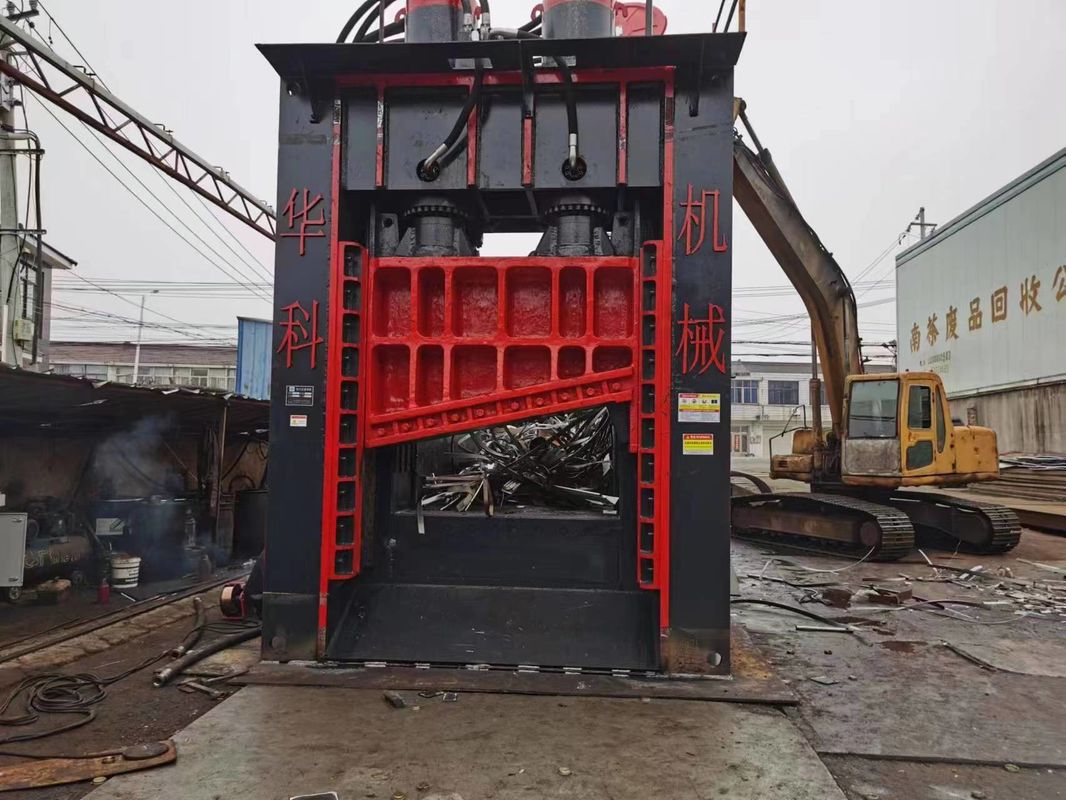
Heavy Scrap Shear Selection Guide for Steel Mills, Foundries, and Recycling Yards
SEO Title: Heavy Scrap Shear for Steel Mills, Foundries and Scrap Yards Meta Description: Learn how to select the Q91Y-630W heavy scrap shear based on material size, tensile strength, blade width, feed box dimensions, and hourly capacity.
Different Industries Have Different Scrap-Cutting Requirements
A heavy hydraulic scrap shear should not be selected only according to nominal tonnage. Steel mills, foundries, fabrication plants, and recycling yards often process materials with very different shapes and loading conditions.
The Q91Y-630W heavy scrap shear combines a 655-ton documented shearing configuration, a 1600mm cutting blade, a 7000mm feed box, and an estimated steel-scrap capacity of 9–11 tons per hour.
For Scrap Recycling Yards
Recycling yards usually receive mixed materials with inconsistent dimensions.
Important selection factors include:
Maximum individual piece size
Percentage of heavy solid scrap
Longest incoming material
Required final cut length
Crane or grab loading speed
Daily operating hours
The 7000 × 1600 × 900mm material box is suitable for long scrap that must be gradually pushed toward the blade.
For Steel Mills
Steel mills may use the shear to prepare scrap before furnace charging.
In this application, customers should confirm:
Furnace opening dimensions
Preferred charge length
Maximum steel section
Required hourly output
Material grade
Internal transport method
The rear pusher provides approximately 135 tons of force and includes an adjustable length-control system, supporting repeated cutting of long materials.
For Foundries
Foundries often need manageable furnace-feed sizes rather than precision-cut finished parts.
The machine can shorten plate remnants, round steel, square steel, and structural scrap, subject to the documented material-strength limit.
For steel with tensile strength not exceeding 450MPa, the reference capacities are:
Material
Reference size
Round steel
Ø130mm
Square steel
120 × 120mm
Steel plate
60 × 600mm
These values should be confirmed against the customer’s actual material grade and loading arrangement.
For Fabrication Plants
Fabrication plants may generate predictable offcuts from plate cutting, welding, structural assembly, or machining.
Compared with mixed recycling scrap, these materials are often easier to classify. Customers can provide precise information such as:
Plate thickness and width
Profile dimensions
Steel grade
Maximum length
Average daily volume
This allows the shear configuration to be evaluated more accurately.
Main Selection Parameters
Parameter
Q91Y-630W
Combined shearing force
655 tons
Blade width
1600mm
Feed box
7000 × 1600 × 900mm
Holding force
Approximately 160 tons
Rear pushing force
Approximately 135 tons
Steel-scrap capacity
Estimated 9–11 tons/hour
Material-strength reference
≤450MPa
Control
PLC and remote control
Information Required Before Quotation
Customers should provide:
Scrap photos and videos
Maximum material dimensions
Steel grade or tensile strength
Solid or hollow construction
Required cut length
Required hourly or daily capacity
Local voltage
Destination port
A correct heavy scrap shear recommendation should match the largest material cross-section, not only the average production volume.